
NHS staff asking about an “NHS mortgage UK” are often surprised to find out there is no single product with that name. What does exist is something arguably more useful: a set of lender policies, government schemes, and professional mortgage products that collectively give healthcare workers a real edge over standard applicants. If you are a nurse, doctor, paramedic, allied health professional, or any other NHS employee, the mortgage market has more flexibility for you than most people realise. The key is knowing where to look and, critically, how to present your income correctly to the right lender.
Table of Contents
- Quick Takeaways
- What Is an NHS Mortgage in the UK?
- How Lenders Assess NHS Income
- Government Schemes for NHS and Key Workers
- Professional Mortgage Products for Healthcare Staff
- Comparing Your Main Options
- Common Mistakes NHS Staff Make on Mortgage Applications
- Frequently Asked Questions
- References
Quick Takeaways
| Key Insight | Explanation |
|---|---|
| No official “NHS mortgage” product exists | What NHS staff access are specialist lender policies and government schemes, not a branded NHS product. Understanding this distinction stops you searching in the wrong places. |
| You can potentially borrow more than the standard 4.5x salary | NHS staff, particularly clinical professionals, can access income multiples of 5x to 6.5x through professional mortgage products, compared to the standard 4 to 4.5x offered to most applicants. |
| Overtime, shift pay, and on-call allowances count for many lenders | Some lenders include 100% of regular overtime and shift enhancements in their affordability assessment, which can add tens of thousands to your borrowing capacity. |
| The First Homes Scheme can deliver 30-50% off a new-build | NHS staff may qualify for priority access to the First Homes Scheme in England, which offers new-build homes at a discount of 30% to 50% below market value, subject to local council rules. |
| Locum and bank workers are not automatically excluded | Specialist lenders will consider locum income and bank-shift income, but the evidence requirements vary. Most want at least 12 months of documented history; some will consider 3 months for regular locum work. |
| Lender criteria vary enormously | How Halifax, HSBC, Nationwide, and Kensington assess NHS income is very different. The wrong lender for your specific income structure can result in a refused application or a much smaller loan. |
| A specialist broker makes a material difference | An adviser who knows NHS pay bands, banding supplements, and which lenders favour specific NHS contract types will almost always secure a better outcome than applying directly. |
What Is an NHS Mortgage in the UK?
The term “NHS mortgage” is widely used but technically misleading. There is no government-issued or NHS-branded mortgage product available to healthcare workers today. The government’s original Key Worker Mortgage Scheme, which did offer dedicated support to NHS staff among others, was discontinued several years ago. What you are left with is a patchwork of lender-specific policies, professional mortgage products, and government homeownership schemes that NHS workers can access.
In practice, this is still very meaningful. Lenders that understand NHS employment treat healthcare workers as lower-risk borrowers because of the stability of NHS contracts, the structured nature of NHS pay progression through Agenda for Change bands, and the long-term job security that public sector employment typically provides. That risk perception translates into more generous lending criteria for you.
The phrase “key worker mortgage” is also used interchangeably. NHS staff sit firmly within the key worker definition used by most lenders and government schemes, alongside teachers, police officers, firefighters, and armed forces personnel. If you work in the NHS, every mention of “key worker mortgage” in lending literature applies to you.

How Lenders Assess NHS Income
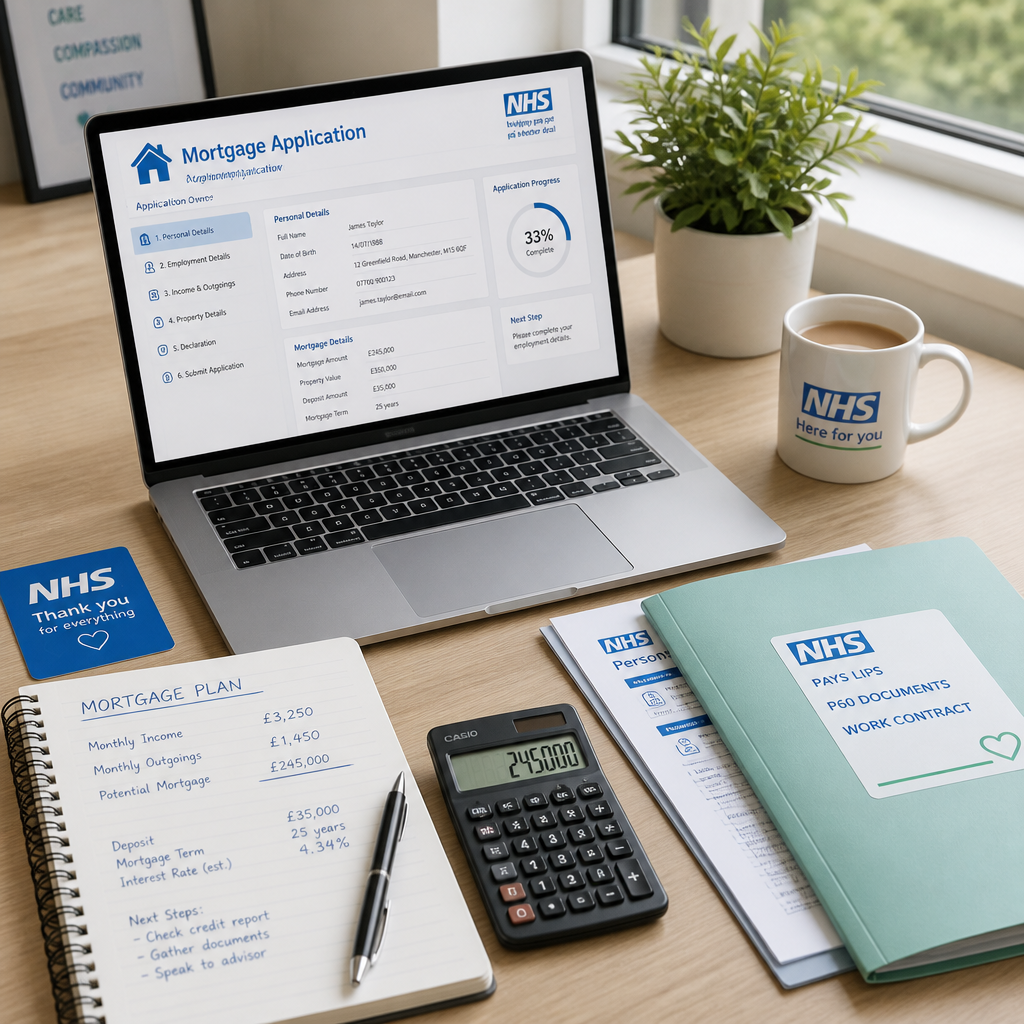
This is where NHS mortgage applications either succeed spectacularly or fall apart entirely. NHS pay is complex. Your gross income on paper is rarely the full picture, and many lenders simply do not know how to read an NHS payslip correctly.
Income Components That Different Lenders Treat Differently
NHS pay can include a basic salary, overtime, banding supplements, unsocial hours enhancements (nights, weekends, bank holidays), on-call payments, London weighting, recruitment and retention premia, and locum or bank-shift income. Here is how this gets treated across the market:
- Overtime and bank shifts: Some lenders count 100% of this income after seeing three months of payslips showing it consistently. Others average it over 12 months or apply a 50% cap. A few disregard it entirely.
- Unsocial hours enhancements: The same split applies. Lenders like Halifax are known for including 100% of regular shift allowances and on-call payments evidenced on payslips. Others treat them as irregular and exclude them.
- London weighting and high-cost area payments: Accepted by some lenders as regular, documentable income. Policy varies significantly even between lenders that are otherwise NHS-friendly.
- Locum income: Most lenders want 12 months of history. A smaller number will consider as little as three months if the locum work is regular and well-documented. Self-employed doctors and locum staff are not the same thing in lender terms, and mixing them up in an application causes problems.
- Bank-only income: Some lenders accept this as a sole income source after six to twelve months of evidence. Others require a permanent NHS contract alongside any bank work.
The practical implication is direct: submitting your application to the wrong lender can mean having a significant portion of your income ignored. A nurse earning £35,000 basic but adding £8,000 in regular overtime and shift enhancements is a very different applicant to one earning £35,000 flat, but only if the lender you choose knows how to assess it.
Pro tip: Before you approach any lender, compile a full income breakdown including your last three months of payslips and your most recent P60. Annotate what each line item represents. An NHS mortgage specialist can then match your income profile to the lenders most likely to assess it favourably.
Income Multiples Available to NHS Staff
Standard mortgage lending sits at 4 to 4.5 times your income. NHS staff using professional mortgage products or specialist lender criteria can often access considerably more. Clinical professionals, including doctors, dentists, and senior allied health professionals, can access income multiples of 5x to 6.5x their salary through dedicated professional mortgage products. Nationwide’s Helping Hand product, for example, offers lending of up to six times salary for eligible first-time buyers, with the minimum income threshold recently reduced to £30,000 for sole applicants and £50,000 for joint applicants.
NatWest’s professional mortgage range has been noted as supporting lending of 5.5x to 6.5x for NHS consultants, GP partners, and allied health professionals earning above a certain threshold. The borrowing multiple available to you depends on your specific role, contract type, and overall financial profile, not just the fact that you work for the NHS.
The key to getting the most from an NHS mortgage application is including all income, not just basic pay. The difference between a basic-salary-only assessment and a full income assessment can amount to £50,000 or more in borrowing capacity.
Government Schemes for NHS and Key Workers
Beyond lender-specific policies, NHS staff have access to several government-backed homeownership schemes. None of them are exclusively for NHS workers, but NHS staff qualify for most of them and in some cases receive priority consideration.
The First Homes Scheme (England)
The First Homes Scheme allows eligible first-time buyers to purchase a new-build property at a discount of 30% to 50% below market value. To qualify, you must be a first-time buyer, earn a maximum of £80,000 per year before tax (or £90,000 if you are buying in London), and be able to obtain a mortgage for at least half of the purchase price. The discount is applied permanently to the title, so any future sale also happens at a discounted price, keeping homes affordable for successive buyers.
Critically for NHS staff: local councils can apply their own priority criteria to First Homes allocations. Many councils specifically name key workers, including NHS employees, as a priority group. This means that in practice, NHS workers can jump the queue over other eligible first-time buyers in their area. It is worth contacting your local council and checking their specific First Homes criteria before assuming you will or will not qualify.
Shared Ownership
Shared Ownership lets you buy a share of a property, typically between 25% and 75%, and pay rent on the remainder to a housing association. Because you are only mortgaging your purchased share, the deposit required and the monthly mortgage payment are both lower than buying outright. Some Shared Ownership schemes give priority to key workers. Over time, you can buy additional shares through a process called staircasing, eventually owning the property outright if you choose.
Shared Ownership is not a perfect solution. You pay rent on the share you do not own, service charges can be significant on leasehold properties, and selling can be more complex. But for NHS staff in high-cost areas who cannot stretch to full ownership, it is a genuinely viable route onto the property ladder.
Right to Buy
For NHS staff who are also council or housing association tenants, the Right to Buy scheme remains available. There is no additional discount for being a key worker under this scheme; it works on the same terms for any eligible tenant. However, it can be a significant route to home ownership for NHS workers who currently rent their home from the local authority.
Professional Mortgage Products for Healthcare Staff
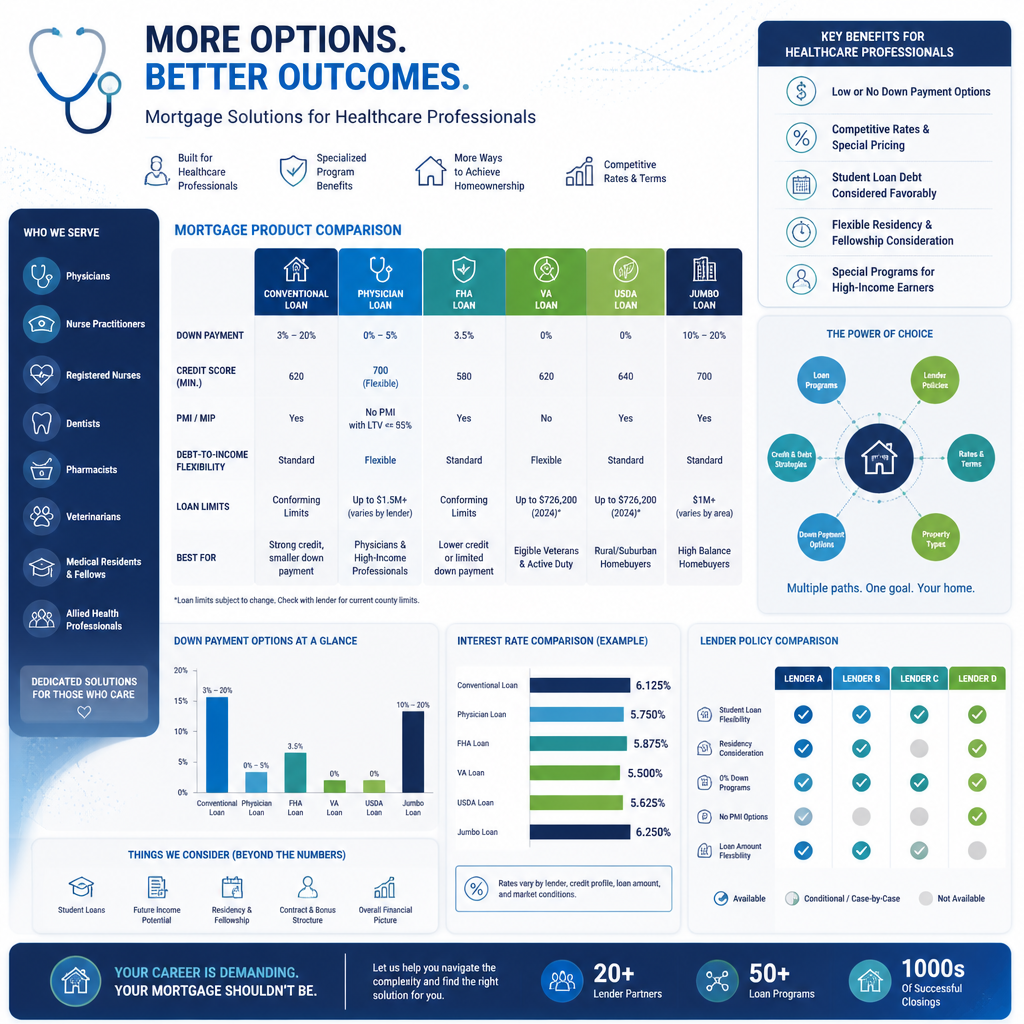
Professional mortgage products sit alongside the government schemes as one of the most valuable tools available to NHS healthcare workers. These are mortgage products specifically designed for borrowers in regulated, career-structured professions. NHS clinical staff, particularly doctors and dentists, are prime candidates. But allied health professionals, senior nurses, and other clinical roles can also qualify depending on the lender.
How Professional Mortgages Differ From Standard Products
A professional mortgage typically offers two advantages that a standard product does not. First, a higher income multiple, often 5x to 6x, reflecting the recognised long-term earning trajectory of professional roles. Second, a more flexible assessment of career stage. A newly qualified doctor on a training contract, for instance, may be offered lending based on their projected consultant salary rather than their current training salary. Kensington Mortgages is one lender specifically noted for writing specialist criteria for NHS staff on training contracts and locum income.
Barclays offers enhanced borrowing for certain qualified medical professionals, including doctors and dentists. Nationwide’s Helping Hand product, while not labelled a professional mortgage, achieves a similar outcome for first-time buyers. Saffron Building Society handles NHS cases via a professional mortgage product with manual underwriting for non-standard income structures. The right product depends entirely on your role, income composition, and whether you are buying for the first time or remortgaging.
Kensington’s Hero Mortgage
Kensington Mortgages offers a product known as the Hero Mortgage, designed specifically with key workers in mind. NHS clinicians, teachers, police officers, and firefighters are among the eligible groups. A notable feature of this product is the inclusion of 100% of overtime and second-job income within the affordability assessment, subject to eligibility. This is exactly the kind of lender-specific policy that can make a decisive difference to an NHS worker whose total earnings include significant elements beyond basic salary.
Pro tip: If you are a clinical professional on a training contract or in a role with structured progression, ask any adviser you speak to specifically about professional mortgage products and projected income assessments. Not every broker will raise this automatically, and it can dramatically change what you are able to borrow.
Comparing Your Main Options
| Option | Best Suited For | Key Advantage |
|---|---|---|
| Professional Mortgage (e.g. via Barclays, Kensington, NatWest) | Clinical NHS staff, doctors, dentists, senior nurses, allied health professionals | Higher income multiples (5x to 6.5x), flexible treatment of training contracts and projected salary |
| First Homes Scheme (England) | NHS first-time buyers in areas with key worker priority allocations, income under £80,000 (£90,000 in London) | 30% to 50% permanent discount on a new-build property; local councils may prioritise NHS staff |
| Shared Ownership | NHS staff in high-cost areas who cannot afford full ownership, or those with smaller deposits | Lower deposit and monthly mortgage payment; option to staircase to full ownership over time |
Common Mistakes NHS Staff Make on Mortgage Applications
The most common mistake is applying directly to a high street lender without specialist advice and presenting only basic salary figures. This is the fastest way to undersell yourself as an applicant. Lenders that do not specialise in NHS income structures will often default to their most conservative assessment criteria, stripping out overtime, shift enhancements, and other variable income entirely.
A second mistake is assuming that all lenders treat NHS contracts equally. A permanent Agenda for Change contract, a fixed-term training post, a locum engagement, and a bank worker arrangement are four entirely different things in a lender’s underwriting model. Applying to a lender without checking whether your specific contract type meets their criteria wastes time and leaves a footprint on your credit file.
Third: underestimating the value of deposit size in the context of a professional mortgage. Professional mortgage products often require a minimum deposit of 10% or 15%, and the income multiples available can shift depending on the loan-to-value ratio. Running the numbers at different deposit levels before you apply gives you a clearer picture of your real options.
Finally, NHS workers who are also self-employed, whether as GP partners, locum doctors, or private practitioners alongside their NHS role, frequently encounter lenders who do not know how to assess mixed income. This is where a specialist adviser becomes not just useful but essential. The wrong lender will decline an application that the right lender would approve without hesitation.
At Albion Forest Mortgages, our advisers work with NHS staff and key workers every day. We know which lenders include shift pay, how to present a training contract, and how to structure an application that reflects your full earning picture, not just the number on your P60. Whether you are a first-time buyer or looking to remortgage, we can help you find the right product for your specific situation, online, by phone, or face to face.
Frequently Asked Questions
Is there an official NHS mortgage in the UK?
No. There is no official mortgage product called an “NHS mortgage.” The term refers to a collection of specialist lender policies, professional mortgage products, and government homeownership schemes that NHS staff are eligible for. The original government Key Worker Mortgage Scheme that once existed for NHS workers was discontinued several years ago.
Can NHS workers borrow more than the standard 4.5x salary?
Yes, in many cases. NHS clinical professionals using professional mortgage products can access income multiples of 5x to 6.5x their salary. Lenders including NatWest, Nationwide, and Kensington all have products or criteria that support higher borrowing for NHS and key worker applicants, subject to eligibility and affordability checks.
Will lenders count my NHS overtime and shift allowances?
Many specialist lenders will, but not all. Some lenders accept 100% of regular overtime and shift enhancements after seeing three months of consistent payslips. Others average the income over 12 months, cap it at a percentage of basic salary, or exclude it entirely. This is one of the key reasons why using a specialist NHS mortgage adviser matters. The difference in borrowing capacity between a lender that includes your shift pay and one that does not can be significant.
Can locum doctors and bank workers get a mortgage in the UK?
Yes, though the evidence requirements are stricter. Most lenders require at least 12 months of locum or bank-shift income history. Some specialist lenders will consider as little as three months if the work pattern is consistent and well-documented. Bank-only income can be accepted as a sole income source by certain lenders after six to twelve months of evidence. An adviser familiar with NHS income structures will know which lenders to approach for these specific scenarios.
What is the First Homes Scheme and can NHS staff use it?
The First Homes Scheme is a government scheme in England that allows eligible first-time buyers to purchase a new-build property at a discount of 30% to 50% below market value. To qualify, you must be a first-time buyer, earn under £80,000 per year before tax (£90,000 in London), and be able to mortgage at least half of the purchase price. NHS staff are not exclusively entitled to it, but many local councils prioritise key workers, including NHS employees, when allocating First Homes properties.
Should I use a specialist NHS mortgage broker or go direct to a lender?
For most NHS workers, using a specialist broker is the better choice, not just for convenience but because of the material impact on the outcome. NHS income structures, particularly those involving overtime, shift pay, locum income, or mixed employment, require a broker who knows which lenders assess these correctly. Going direct to a single lender means you only access that lender’s criteria, which may not suit your income profile at all. A good specialist adviser will survey the market and match your specific situation to the lender most likely to say yes at the best rate.
Does Shared Ownership work for NHS workers?
Shared Ownership can be a strong option for NHS staff in high-cost areas where full ownership is out of reach on a single NHS salary. You buy a share of a property, typically between 25% and 75%, and pay rent on the remainder to a housing association. The mortgage needed is on your share only, so the deposit and monthly payments are lower than for an outright purchase. Some Shared Ownership schemes give priority to key workers. The scheme has limitations, including ongoing rent costs and service charges, so it is worth modelling the total monthly cost carefully before committing.
Have you applied for a mortgage as an NHS or key worker? Share what worked for you in the comments below, we would love to hear from our readers.
References
- NHS mortgage guide covering hidden perks, income assessment, and lender policies for healthcare staff
- Overview of how to get an NHS mortgage including which high street lenders support NHS workers
- NHS mortgage information including the First Homes Scheme and Shared Ownership for key workers
- Detailed breakdown of how lenders assess NHS income including overtime, locum, and bank shifts
- NHS mortgages in the UK guide covering available schemes and specialist lender policies in 2025